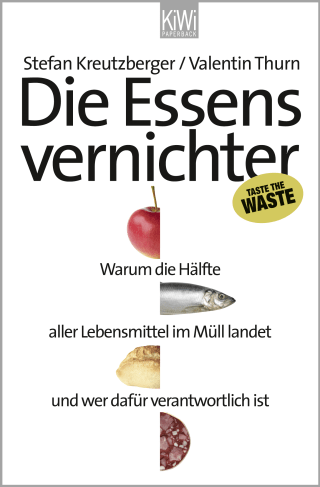
Around half of all our food ends up in the bin. Most of it is thrown away en route from the field to the shop, before it even reaches our tables: every second lettuce, every second potato and every fifth loaf of bread. We expect every kind of food to be available throughout the year, supermarkets to offer their entire product range continuously, and the bread on the shelves to be fresh until late at night. The desire of consumers to have everything at all times intensifies global hunger. If we threw away less, global market prices would decline and there would be enough food for the hungry people in the world.
The food waste scandal – which contributes significantly to climate change – has to be addressed on both an international and an individual level. The Food Destroyers suggests many ways in which indi-viduals can change their behaviour: by organising regional buying cooperatives, for example, which bring together farmers and customers, or by cooking dishes that make use of leftovers. But also by exerting pressure on supermarkets to sell off or give away produce more cheaply shortly before its sell-by-date.
Thurn’s TV documentary “Taste the Waste”, which was aired in Germany for the first time in 2010 and has since been broadcast in 12 countries, achieved record viewing figures for the ARD TV channel. The motion picture “Taste the Waste” coming to cinemas in September has been translated into the English, French, Spanish and Italian language by now, and book and film are supported by publicity campaigns and numerous consumer organisations.
The launch of the book will be accompanied by a worldwide campaign by Greenpeace, Welthun-gerhilfe, Slow Food and other NGOs.