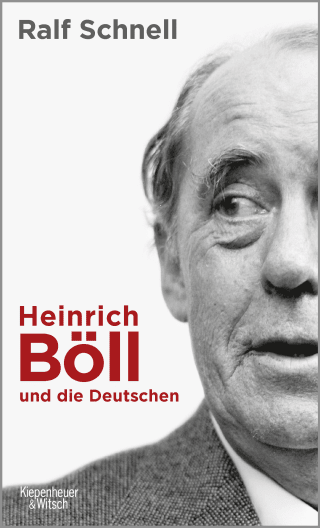
Heinrich Böll And The Germans
An astute study on the occasion of the 100th birthday of one of Germany’s most important writers: Heinrich Böll (1917-1985), born in Cologne, ordinary soldier in World War II, representative of the “Trümmerliteratur” (“literature of the rubble”) after 1945, author of major novels, critical intellectual with significant public influence and winner of the Nobel Prize for literature in 1972. What did the writer Böll make of the Germans, and they of him? Ralf Schnell, a renowned authority on contemporary German-language literature, devotes himself to Böll’s relationship with Germany and the Germans and shows – in a clear and engaging way – how the political, social and cultural dislocations of the 20th century influenced Böll’s life – and to what extent Böll’s artistic responses resonated with his readers.
Beginning with Böll’s origins and youth – his large petit-bourgeois Catholic family in Cologne, his participation in the war and his time as a prisoner of war – Schnell traces the key aspects of Böll’s life and work. He sheds light on his literary beginnings as a young father in the postwar period, how he came to terms with war guilt and the Holocaust, the political conservatism of the Adenauer era, the formation of a literary enterprise through Gruppe 47 (Group 47) and Böll’s relationship to East Germany and the Red Army Faction. Indispensable for anyone interested in learning about or rediscovering the work of Heinrich Böll.
- Publisher: Kiepenheuer&Witsch
- Release: 05.10.2017
- ISBN: 978-3-462-04871-1
- 240 Pages
- Author: Ralf Schnell